


New Data Shows Which Generosity Investments Have the Highest Returns
Friday, November 13th, 2026
All generosity counts. But some investments have a higher return,
82% of employees say generosity is very or extremely important to work for a generous company. And they have clear ideas about what makes a company genuinely generous. The 2026 Business Generosity Report includes a category-by-category benchmark of which generosity investments are still earning real credit with employees and which are sliding toward table stakes.
Employees were asked to rate a variety of activities as genuinely generous, appreciated, or table stakes for any decent employer.
The Baseline for Generosity is Shifting:
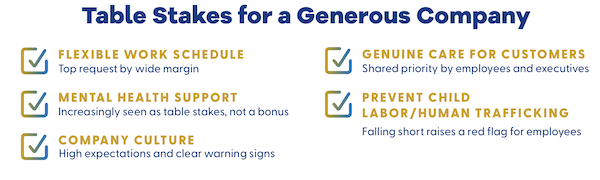
The data flags three areas where the baseline for generosity is shifting. Most of these requests do not require expanded benefits or increased budget allocation but underdelivering here costs more than it used to: disengagement, eroding trust, and the kind of goodwill loss that compounds over time.
- Flexible work: The top employee priority for six years running and offered by 69% of employers, has reached a tipping point: 1 in 4 employees now see it as table stakes, though most still credit it as generous or appreciated.
- Company culture: Nearly 40% of employees view open communication, a clear purpose and values, workforce diversity, and clear AI communication as things any decent employer should provide.
- Mental health support: This now carries the highest table-stakes rating of any employee-care item — 30% of employees consider it something any decent employer provides, not a generous act.
The Investments That Still Differentiate
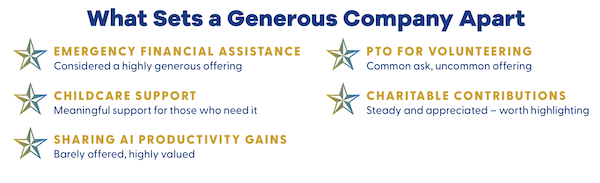
Three stand out as the highest-return opportunities right now because they carry the highest "genuinely generous" ratings and are still uncommon enough to set a company apart.
- Emergency financial assistance carries the highest "genuinely generous" rating of any employee-care item. 38% of employees call it genuinely generous, and another 39% say they appreciate it because not every company offers it. Employer offering has nearly doubled since 2023 (28% → 48%), but fewer than half of companies still offer it. And unlike flexible work or mental health support, it hasn't yet reached table-stakes territory. That's a rare combination: very important to employees, credited as exceptional, and still uncommon enough to differentiate.
- Sharing AI productivity gains may be the single largest untapped opportunity in the entire survey. Only 3% of employers currently find ways to share AI productivity gains with employees whether that’s through more flexible schedules, a new bonus pool, or some other mechanism. Yet 75% of employees say they would consider this as genuinely generous or clearly differentiating. As executives continue working through AI implementation and new value created, sharing that with employees is a move almost no one has made yet.
- PTO for volunteering is employees' top community priority, 47% name it their most important community investment, yet 52% of companies still don’t offer it. What distinguishes it from company-organized volunteer days is what it communicates. A company-organized event reflects the company’s values. Paid time to volunteer for a cause an employee chose honors their values. Employees feel that difference.
Making Investment Visible
64% of executives report increasing investment in generosity. Only 40% of employees perceive it. Part of that gap reflects definition drift: executives and employees are increasingly thinking about generosity differently, with executives prioritizing community giving while employees center on generosity that shows up in the workplace experience.
Most of the highest-return opportunities don’t require a larger budget. They require knowing which investments employees still credit as exceptional and directing resources there.

